Faculty member Kate John-Alder featured in the October 2025 issue of Landscape Architecture Magazine
Main Content
October 1, 2025

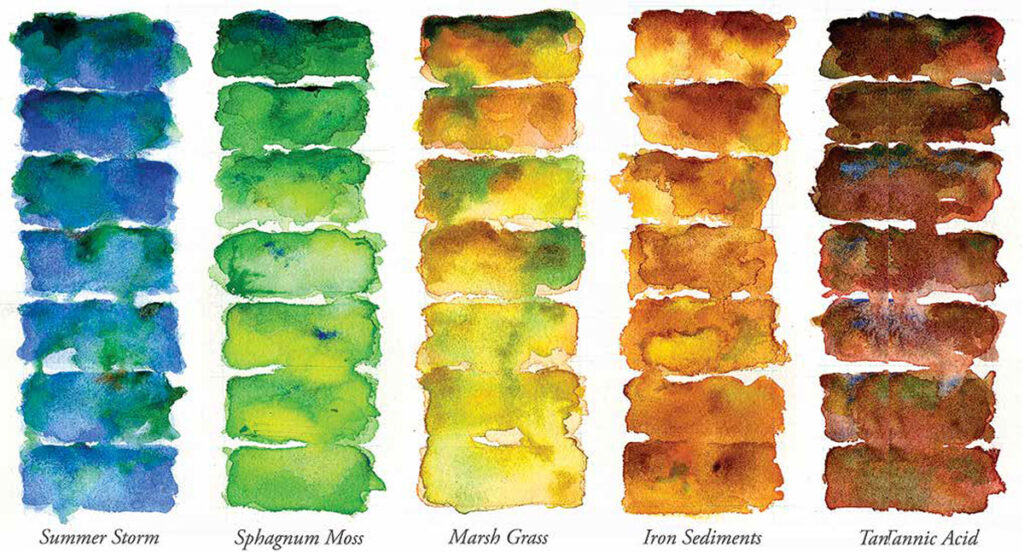
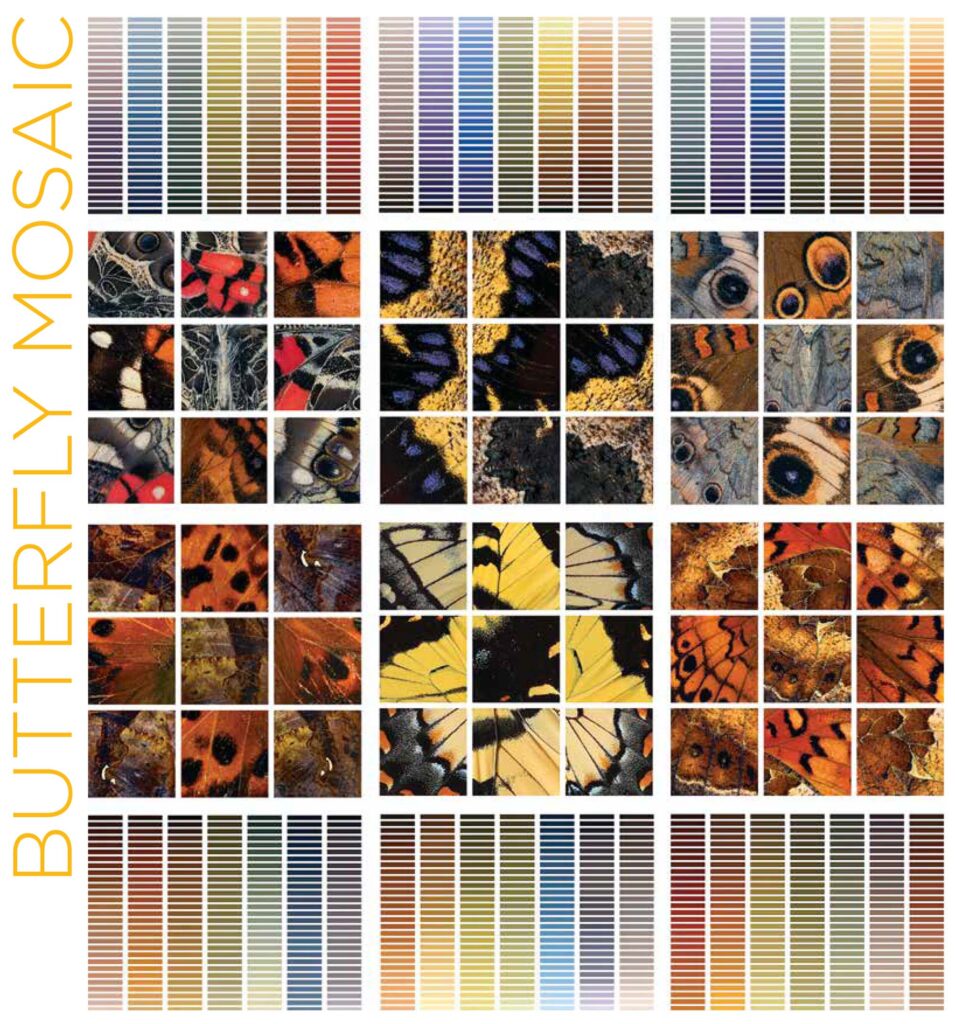
In the spring of 2020, Kathleen John-Alder initiated a study that explored the material and temporal dynamics of the Pine Barrens, one of the largest tracts of undisturbed land on the eastern seaboard, using soil, water, plants, and animals as material evidence. The study initially focused on the biotic community of the Pine Barrens, deploying field surveys, photography, archival research, interviews, and personal observations to capture the coloration of the various species of birds, reptiles, and butterflies that inhabit this landscape. Subsequent studies explored the variable surfaces, reflections, plant life, transparencies, and colors of water. Graffiti on abandoned brickworks documented the impact of anthropogenic actions. The work of Annie Dillard, one of the great natural history writers of the 20th century, served as a catalyst for the use of complete immersion as a way to see and know a landscape, and live responsibility within it.
According to John-Alder, the study flips the quantitative methods of landscape architecture to highlight visual beauty rather than functional value, thus becoming a means to interrogate disciplinary certainties. “I think I saw it as a subversive way to critique the discipline’s ways of seeing,” she observed in an interview for the article, “and if I did so, I wondered if this would foster a more inclusive attentiveness to other-than-human organisms, processes, and agencies.”

David Smith: We are Not Alone: Celebrating the Wildlife in our Local Landscapes
Main Content

New Brunswick, New Jersey lies in the heart of the I95 Corridor between Boston and Washington, the most densely populated region of its size in the US. The city has even given itself the nickname “Hub City” in recognition, at least in part, of its location at a convergence of major highways. With all this density and development, it’s no surprise that to many who live in the area the idea of wildlife seems distant and alien. Wildlife belongs to wild places, and New Brunswick is certainly anything but that. But if you look closely, and listen, you’ll find a surprisingly rich diversity of animal life within a short bike or bus ride. In this presentation, I will share some of my experiences observing and photographing wildlife in the area and discuss how those observations connect with specific components of our very familiar local landscapes.
Remembering Dieter Kienast on his 80th Birthday
Main Content
October 30, 2025
Amidst a striking change in the relationship between society and nature in the 1970s, Kienast sought a synthesis between design and ecology. As a designer, planner, researcher, and university lecturer, Kienast introduced new facets to those fields. Critiques of urban planning, processes of participation, and the significance of spontaneous urban vegetation played just as prominent a role in these discussions as did art, literature, architecture, and the popularity of postmodernism.
Dr. Anette Freytag, who has written a critical monography on Dieter Kienast explains on the Landscape Architecture Platform Landezine, why his work is so important and influential to this day. To honor Kienast, his Ten Theses on Landscape Architecture have been translated into English and put online.

Sachi Patel (2025)
Main Content
Mapping Movement/ Erasing the Line
Delaware River and Its Tributaries
Abstract of the Thesis
Rivers are often represented as fixed lines on maps, yet they are dynamic, ever-changing
systems that defy such rigid boundaries. This design project challenges the conventional
delineation of rivers by interrogating the visual and physical lines that define them.
Inspired by the work of Anuradha Mathur and Dilip da Cunha, it explores how fixed
borders do not confine rivers but rather exist as fluid, evolving entities shaped by
topography, hydrology, vegetation, and human actions.
To achieve this objective, the project employs multiple visualization technique
that include GIS analysis, photography transects, relative elevation models (REMs),
sectional representations of water levels, digital collage, and a layered three-dimensional
model. The resulting representations challenge the notion of a singular linear boundary,
instead highlighting the network of interactions between water, land, and human presence
that continuously shape and redefine the landscape of a river. Through this visual lens,
this design project underscores the need to adopt a more nuanced and adaptive
understanding of river systems that move beyond the constraints of traditional linear
mapping.
The site for this exploration includes the Lehigh River, the Rancocas River, the
Schuylkill River, and the Brandywine River, all of which are tributaries of the Delaware
River that exhibit different physiographic conditions and different levels of human
intervention.
Ana Maria Oliynyk (2025)
Main Content

The project employs research, visual documentation, and design to explore opportunities for connecting people to nature within the built, densely populated urban environment. While the concept of green space is very vast, this thesis focuses on a garden typology, situated in the context of urban green space. Photographic documentation and analysis of “successful” green spaces and gardens in New York City and Switzerland serves to inform what makes for “good design” in urban green spaces, and apply findings to the context of the urban public garden.
The elements identified in this thesis as the fabric of “good design” are applied to a design exercise of the urban public garden in the context of a courtyard at the Kingsborough Houses public housing complex in Brooklyn, New York. The design serves as a visual application and extrapolation of findings, taking the elements of what makes for good design from abstraction to a working concept.
Looking forward, the ideas explored in this thesis project are a lifelong learning process, and the urban public courtyard garden design application is but a starting point for exploration and future work towards the goal of designing urban green spaces to connect urban dwellers to nature.
Sean Murray (2025)
Main Content
Critical Regionalism in Landscape Architecture:
Re-Design of Papiamento Restaurant (Aruba)
About the Project
This project was born out of the search for a means of developing an authentic design for region that I am not familiar with. The author’s goal is to ultimately work in the design field in the Caribbean, particularly Aruba, but he recognizes that there is a significant American bias in his view of design. In his study of design history, he became aware of the theory of Critical Regionalism. The more he learned about it, the more it became evident that it might be a good way into design in a foreign culture.
Critical Regionalism is an architectural theory that emerged in the 1980s as a reaction to the universalization and globalization of architectural styles and the homogenization of building appearances. It is also a response to the ‘kitschiness’ of many Regionalism designs, which tend to evoke cliché images of times gone by, without any consideration of the meaning or tectonics behind the architectural features.
The study site, Papiamento Restaurant, is a well known restaurant on the island of Aruba. The original house was built on the site in 1866 by a Venezualan man and a Dutch woman for use as an agricultural property. Over the past 160 years, the site has seen several uses and many incremental changes and improvements. It is through this study of the impact of culture and climate on design, that the author has produced a plan for what the next rendition of the site might be.
About the Author
Sean is completing his masters in Landscape Architecture. Prior to returning to school, he founded and operated a landscape design/build firm, Nature’s Apprentice LLC. The firm specializes in high-end residential projects, particularly those involving swimming pools. At the time of the sale of the company at the end of 2021, the company had grown to over 25 employees working all over New Jersey. With close to 30 years of design/build experience, Sean brought a significant amount of construction knowledge to his studies. He has an BA in Economics from Rutgers, as well as an AAS in English Composition and an Undergraduate Certificate in Ornamental Horticulture from Brookdale CC.
Sean’s goal upon graduating is to become licensed in the field and work for a large international design firm, where he can continue to gain experience developing designs in foreign cultures and climates. He is currently working as a freelance design and construction management consultant.
Anne Gharaibeh: Blue-Green Infrastructure in Urban Landscapes
Main Content
Date of lecture: October 1st, 2025
ABSTRACT
In the age of the Anthropocene, cities are expanding, technologies are outpacing regulations, inequalities are widening, and the climate is shifting with intensifying urgency. Yet, the essence of a city (its streets, food, gardens, and cultural rhythms) reminds us why societies long for safer, more meaningful, and more beautiful everyday lives.

This lecture examines how landscape architecture and urban design can serve as vital tools for resilience. By integrating climate adaptation, community well-being, and the stewardship of natural and cultural heritage, blue–green infrastructure offers pathways toward more sustainable and livable futures. Drawing on published design projects and research, Dr. Anne Gharaibeh will highlight the economic, political, ecological, and social barriers that shape implementation, as well as the practical challenges of embedding blue–green systems in urban environments.
The lecture also emphasizes the role of educators and practitioners in thinking systemically, acting responsibly, and fostering “wall-less studios” where students engage directly with communities and decision-makers. Such approaches underscore the potential for guiding urban transformations toward futures that are resilient, equitable, and profoundly human.
BIO

Anne Gharaibeh, Ph.D., is a Visiting Professor of Landscape Architecture at Rutgers University and former Dean of the College of Architecture and Design at Jordan University of Science and Technology (JUST). She holds graduate degrees in planning and landscape architecture from Texas Tech University and the University of Pennsylvania, as well as a Bachelor of Science in Architecture with honors from JUST.
Her teaching and research focus on urban resilience, blue–green infrastructure, and sustainable land-use planning, and she has mentored students across the Middle East and the United States. In practice, she has advised municipalities in Jordan and contributes to national initiatives through her role on the Economic Development and Modernization climate change and planning development teams of Jordan’s Royal Court. Her work has been recognized with the Shoman Prize for Researchers in Urban Planning and the Second Prize for the design of King Abdullah II Urban Park in Irbid, Jordan.
RESEARCH
Dr. Gharaibeh’s scholarship advances climate resilience through integrated approaches to landscape architecture and planning. She has published widely in international, peer-reviewed journals on urban growth modeling, climate-adaptive design, ecological connectivity, and regional economic resilience. Her pioneering application of artificial intelligence to urban growth assessment is widely cited, offering innovative tools for data-driven planning.
Alongside her academic research, Dr. Gharaibeh has led applied projects on urban redevelopment, heritage conservation, and climate adaptation for municipalities in Jordan. Her recent work explores rain gardens, blue–green corridors, and spatial planning frameworks for resilience, in collaboration with national agencies, the United Nations, and international academic networks. Recognized for bridging science, design, and community engagement, she continues to pursue cross-disciplinary partnerships that deliver practical and equitable solutions for climate-resilient urban futures.
Faculty Presentation: Haemee Han
Main Content
Fictional Terrain

At Jaemee Studio, I am interested in deliberately blurring the boundaries between two disciplines: objects and landscape. Landscapes may be abstracted, condensed, or reconfigured into discrete physical objects, and conversely, objects can expand into the immersive, spatial experiences that landscapes offer. This reciprocal transformation creates a sense of ambiguity where distinctions begin to fade, often forming a hybrid design language that straddles fiction and function, memory and materiality, the intimate and the collective. These experiments occasionally evoke subtle moments of disjunction and architectural uncanny, opening alternative ways of experiencing landscape. Several built and unbuilt projects, ranging from temporary art installations to speculative urban scale proposals will be shared to illustrate how these approaches have been explored and developed in my studio practice.
Bio
Haemee is a teaching instructor at Rutgers University. With Jaemee Studio, she exhibited public art installations across the U.S, Canada, Europe, and Asia. Haemee holds a Master of Landscape Architecture from Harvard GSD and a Bachelor of Landscape Architecture from the University of Illinois at Urbana-Champaign. She is a registered landscape architect in New Jersey.
Rutgers Distinguished Alum: Nick Tufaro
Main Content
Bio

Nicholas Tufaro is a licensed Professional Planner, Licensed Landscape Architect in New Jersey and Pennsylvania, and a Certified Floodplain Manager. Presently employed in his 21st year as a Principal Planner in the Middlesex County Division of Sustainability and Resilience, Nick’s career has spanned a half century in diverse private and public practice of professional design and planning, scaled from residential to regional master planning. Presently, Nick is charged with reviewing projects and developing programs to address responsible long-range planning policy and environmental planning for land use development, open space initiatives, and master plan issues in Middlesex County. These duties include primary responsibility for regional watershed-based planning as expressed in the Manalapan Brook Watershed Protection and Restoration Plan, analysis and partial authorship of the pending Middlesex County Wastewater Management Plan, and responsibility for integration of Green Infrastructure principles in all related elements of the pending Middlesex County Master Plan Updates.