Main Content
Vernacular Place, Ecology, and Culture: Reinterpreting Ghana’s Indigenous Building Legacy for Landscape Resilience.
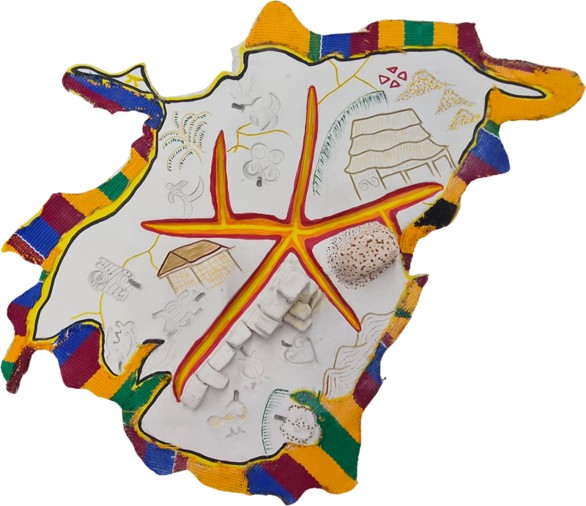
ABSTRACT
What does the increasing reliance of the contemporary landscape architecture field on permanence and material substitution reveal when modernized materials are consistently privileged over Indigenous and local building knowledge that has existed and functioned for generations? This tension extends beyond a single geography and reflects a broader global shift away from vernacular architecture and Indigenous construction practices. This thesis pivots to Ghana in West Africa, specifically the Ashanti Region, where it investigates the shifting role of earth-based construction and the use of local materials. To situate this inquiry, the research examines comparative case studies in Switzerland, Rwanda, and Indigenous North America.
Through this comparative analysis, it becomes evident that material hierarchies are shaped less by technical performance and more by perception, cost structures, labor valuations, capital, developmental models, and aesthetic bias. Switzerland demonstrates the impact of institutional support, Rwanda reflects post-genocide national rebranding, and Indigenous North America reclaims building knowledge as an act of sovereignty. Across all sites, shifts in material narratives depend on who holds the authority to define progress and value.
Returning to the Ashanti Region, this thesis examines sites including Bonwire, Manhyia Palace, Anhwiaso, Lake Bosomtwe, and Kejetia Market, understanding these landscapes not as isolated examples but as layered reflections of history and heritage. These spaces reveal how material choices become negotiations between aspiration, legacy, and imposed systems.
Ultimately, this thesis reframes material as relational rather than purely structural or aesthetic. It challenges prevailing design precedents and calls for a maintenance-aware, stewardship-centered discipline. It argues that design education and professional practice shape how materials are valued, how landscapes are produced, and how cultural systems are either negotiated with or overwritten. In response, this thesis proposes redefining the precedent of landscape architecture, prioritizing relational practice over industrial aspiration..
BIO
Martha Afflu is a recent graduate of the Department of Landscape Architecture at Rutgers University, where she completed her BSLA and later her Master of Landscape Architecture. Her research focuses on colonial legacies, vernacular architecture, and Indigenous building knowledge systems, particularly within the Ashanti region of Ghana. Grounded in both disciplinary inquiry and her identity as a Ghanaian American with ethnic roots in the region, her graduate thesis examines how Western design frameworks often privilege modern materials, efficiency, and aesthetics while overlooking cultural resilience, ecological adaptation, and heritage continuity. Her work highlights the continuity of vernacular systems and practices not only as material traditions but also as ways of relating to land, labor, and cultural memory.

