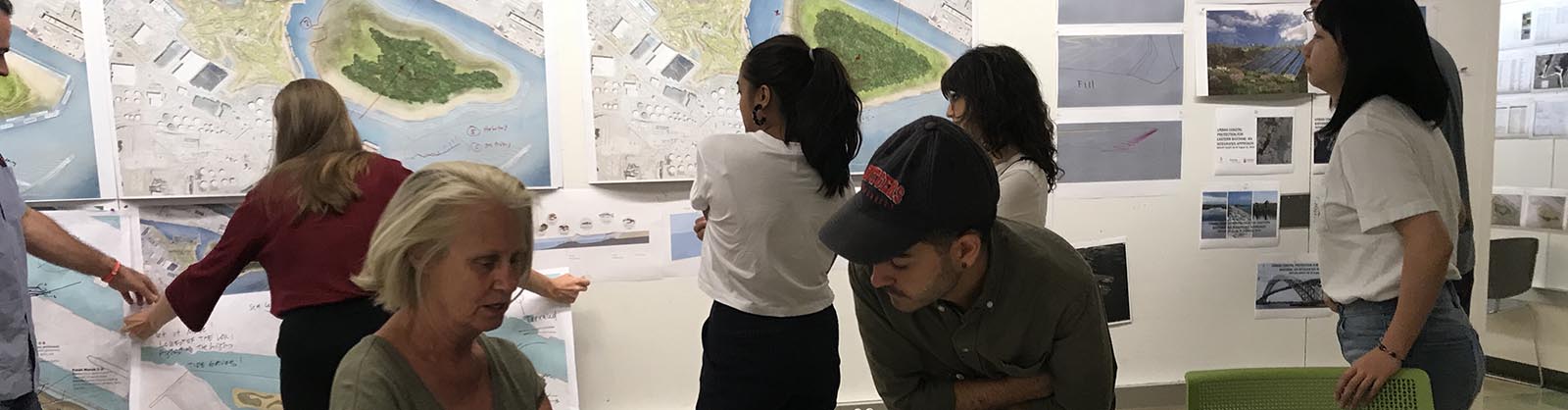
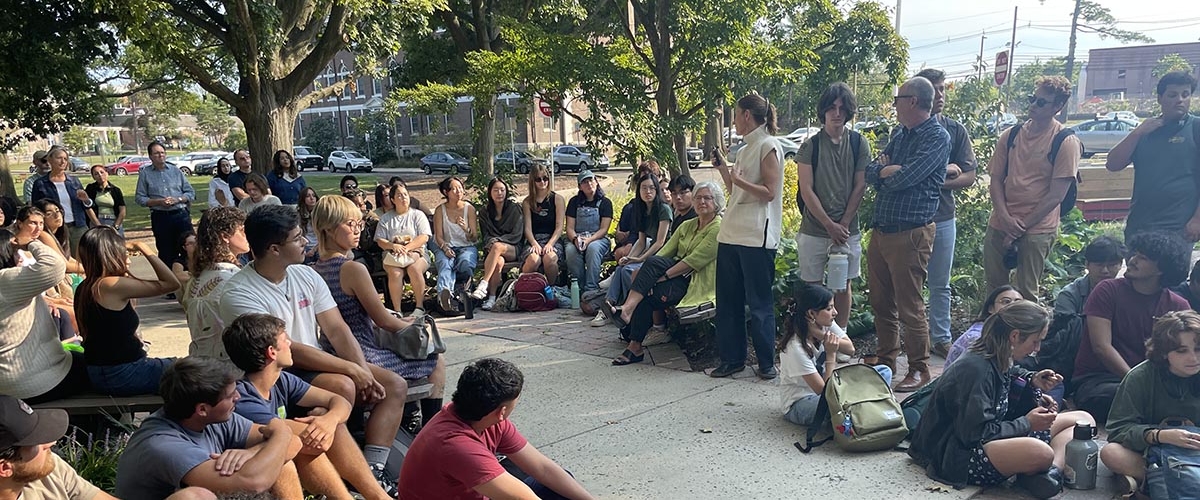
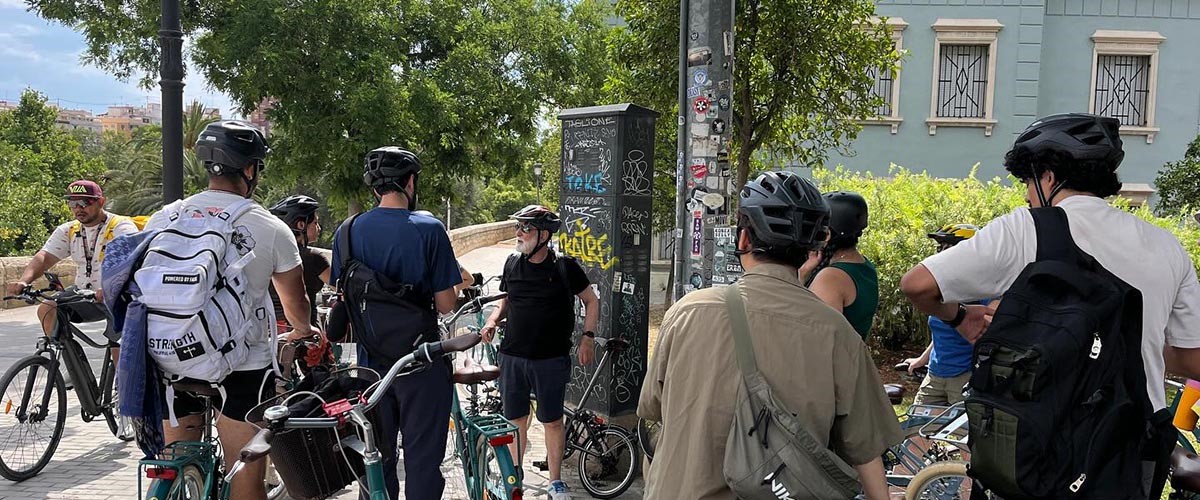
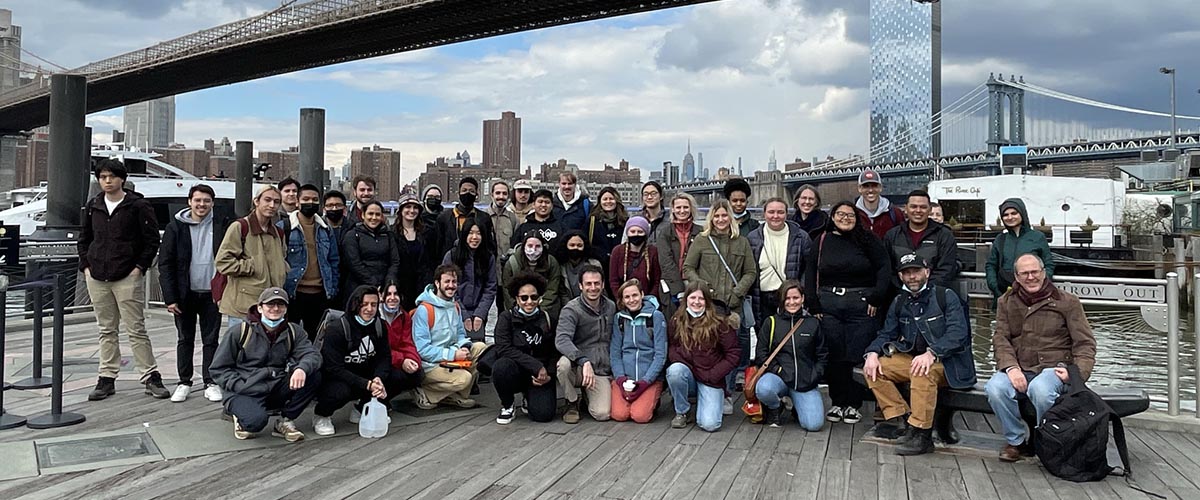
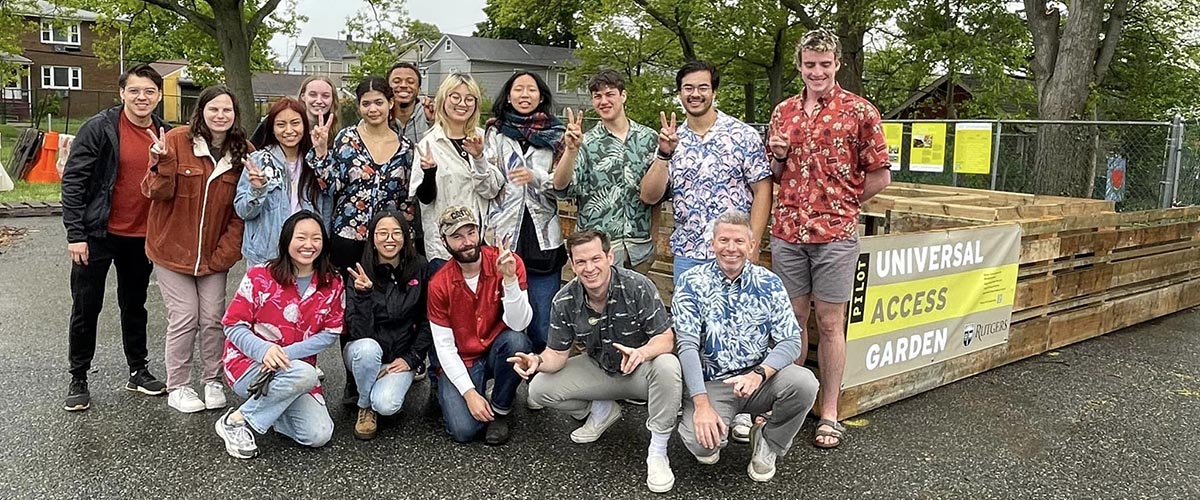
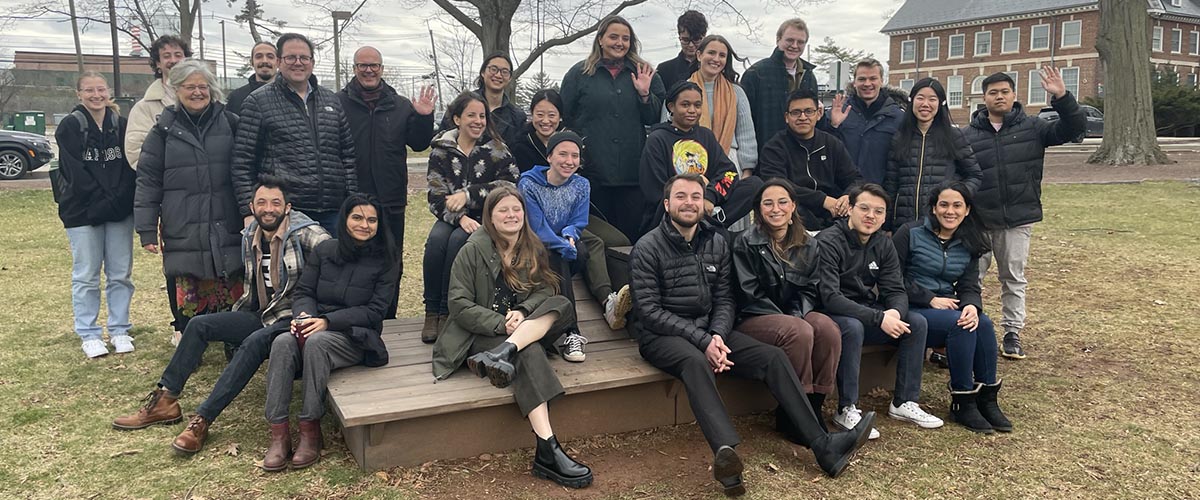
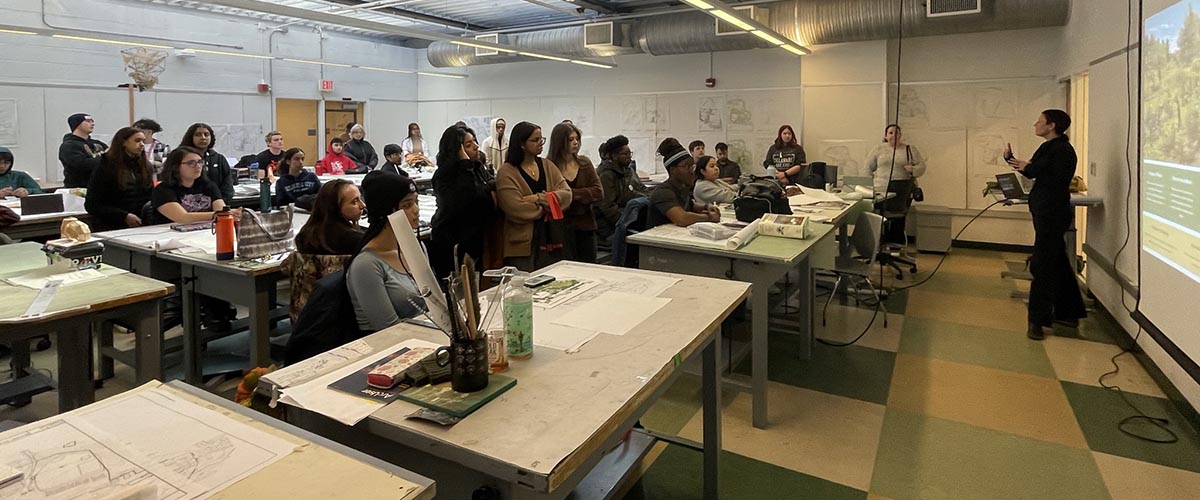
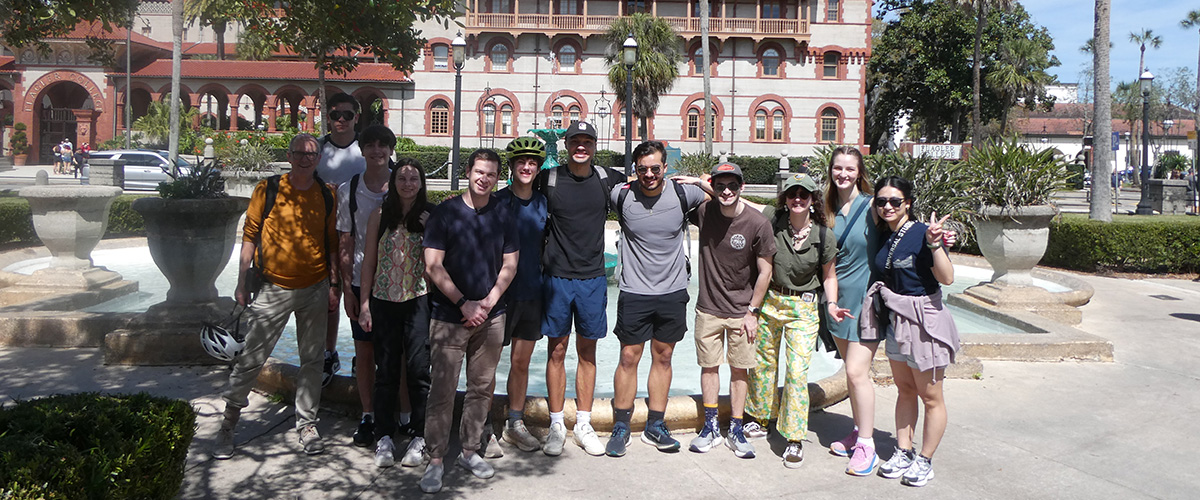
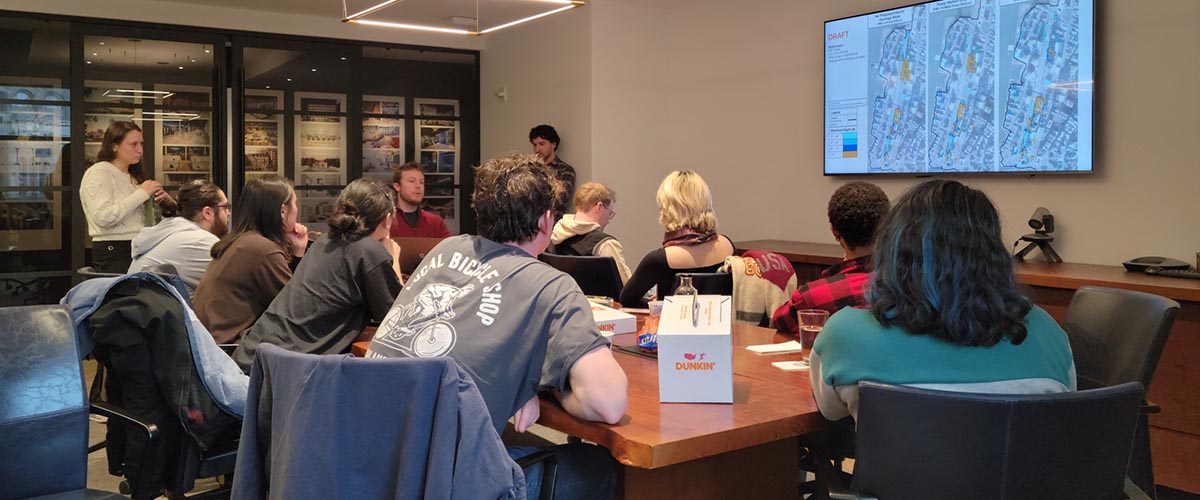
The Landscape Architecture program at Rutgers University is part of the Environmental Planning Design Curriculum of the School of Environmental and Biological Sciences (SEBS). The Environmental Planning Design Curriculum offers four options, or majors, including Landscape Architecture. The other majors include environmental planning, environmental geomatics and landscape industry.
ANNOUNCEMENTS• Spring 2010 Course Patterns for current students are here.
Wed. Sept 30, 2009, 3:55 PM
Eric Sanderson
Mannahatta: A Natural History of New York City
Alampi Room, Institute of Marine & Coastal Studies, Cook Campus
Wed. Oct 7, 2009, 3:55 PM
Environmental Geomatics Lecture
Ellen Creveling, Conservation Science Coordinator, The Nature Conservancy, New Jersey Chapter
Conservation
Planning at Scale: the Nature Conservancy's statewide approach for New Jersey
Abstract: Conservation planning provides an essential tool for prioritizing conservation actions. A critical step in the Nature Conservancy's "Conservation by Design" framework, conservation planning needs to be tailored to a scale appropriate for specific conservation goals. The Conservancy's New Jersey Chapter has applied concepts from
ecoregional planning in order to identify priority conservation areas for the state of New Jersey. Informed by principles of landscape ecology and conservation biology, our methods applied these concepts using statewide data and a GIS to identify the areas in New Jersey that are most critical to conserving the natural habitats and biodiversity of
our state. The next step in our planning process is to update our plan, focusing on the integration of freshwater and terrestrial priorities in order to facilitate effective conservation across New Jersey's landscapes.
Bio: As Conservation Science Coordinator for TNC's New Jersey Chapter, Ellen Creveling is lead on a multi-state Delaware River Basin Freshwater Assessment. Since assuming her current position, she has played an essential role in the New Jersey Chapter's conservation planning efforts at statewide and regional scales. Ellen has a Master of Science in Environmental Conservation from the University of Greenwich (UK) and a Bachelor of Arts from Columbia University.
Cook Douglass Lecture Hall 110
Wed. Oct 14, 2009, 3:55 PM
NANCY COHEN, Artist
Estuary and other landscape-inspired sculptures
Cook Douglass Lecture Hall 110

Nancy Cohen will be showing images of her recent landscape-based work and discussing the development of her ideas and working methods.
Cohen is a mixed-media artist who works in sculpture, installation and drawing. Recent large-scale projects have included a site-specific installation based on the Hudson River for the Katonah Museum of Art and a collaboration with marine biologists and environmentalists based on the Mullica River for the Noyes Museum of Art in Oceanville, NJ. In 2006, Cohen collaborated with Princeton University scientists and a garden designer on an outdoor sculpture for Quark Park in Princeton, NJ.
From a review by Dominique Nahas in Sculpture Magazine, September, 2008: Throughout her career, Nancy Cohen has experimented with materials and forms that underscore the relational possibilities between the appearance of transparency and its opposite, opaqueness. Her naturalist tendencies are abetted by an ethnographer's curiosity and a keen appreciation of cultural parallels and anomalies. All of her various works explore sensations provoked by liminality, that is, threshold states of mind conditioned by factors conducive to transition and transformation.
Cohen has been awarded a Pollack Krasner grant and several sculpture grants from the NJ State Council on the Arts. Her work can be found in the permanent collections of the NJ State Museum, Jane Voorhees Zimmerli Museum, Montclair Art Museum, &Yale University Art Museum among others. Recent exhibitions have included “Handwork” at Spanierman Modern Gallery in NYC and “Global Warning: Artists and Climate Change” at Wesleyan University. www.nancymcohen.com
Wed. Oct 21, 2009, 6:30 PM
5th Annual Steve Strom Memorial Lecture
LAURIE OLIN, Landscape Architect
It's Still Firmness, Commodity and Delight
Trayes Hall, Douglass Campus Center
Lecture Synopsis
Integrity/Sustainability:
. Technique/construction, physical, phenomenal
. Program, utility, service, sociology, affordance, meaning
. Spirit, delight, pleasure, stimulating, inspiring, life affirming
The landscape architecture firm OLIN, recipient of the 2008 Cooper-Hewitt National Design Award, is internationally recognized for design excellence in landscape architecture, urban design and planning.
Location: Trayes Hall, Douglass Campus Center
***Time: 6:30PM***
Wed. Oct 28, 2009, 3:55 PM
NATALIE SHIVERS, Associate University Architect for Planning, Princeton University
Princeton University Campus Plan

The talk will focus on the Princeton Campus Plan, completed in 2008, one of the most comprehensive plans ever developed by Princeton University. The University’s major planning challenge is to accommodate growth on the diminishing available land on campus in an integrated and holistic way that respects and reinforces Princeton’s defining characteristics as a university and a community. Created by architects and planners Beyer Blinder Belle with landscape architect Michael Van Valkenburgh and other consultants, the plan views the campus as a web of interconnected systems and makes recommendations regarding policy, architecture, infrastructure, landscape, and the environment. The talk will also look at the plan one year later and evaluate how it has survived challenges of fiscal constraints, design changes, community concerns, and institutional practices.
Cook Douglass Lecture Hall 110
Wed. Nov 4, 2009, 3:55 PM
FRANK and DEBORAH POPPER
Extending the Idea of Buffalo Commons
Cook Douglass Lecture Hall 110
For a generation Deborah and Frank Popper have explored the idea of the Buffalo Commons as a sustainable future for the rural Great Plains, and their concept is succeeding on the ground. Now they expand the approach to other regions and to cities. The Poppers are now at work on a series of articles and a book extending the Buffalo Commons concept and related approaches to other depopulating rural regions (for instance, Appalachia, the Lower Mississippi Delta and northern New England), large and mid-sized shrinking cities (Detroit, St. Louis, Birmingham [Alabama] and Camden [New Jersey]) and comparable places abroad (central Spain, eastern France and the former East Germany).
Frank’s article, "The Great Plains: From Dust to Dust" (Planning, December 1987), written with his wife, Deborah Popper, a geographer at the City University of New York, put forward the controversial Buffalo Commons idea that touched off a national debate on the future of the depopulating rural parts of the Great Plains region. The Poppers' Plains work was the subject of Anne Matthews' book Where the Buffalo Roam (1992), one of four finalists for the 1993 Pulitzer Prize for nonfiction, and appeared in a second edition in 2002. The Poppers’ work inspired Richard Wheeler’s The Buffalo Commons (1998), a novel where the concept wins out in the end. They and their work appeared in documentary films such as Dreams Turn to Dust (1994), The Fate of the Plains (1995), The Buffalo Commons: The Return of the Buffalo (2008) and several forthcoming ones.
Wed. Nov 11, 2009, 3:55 PM
KATE JOHN ALDER, Landscape Architect
The Garden and the Greenhouse: The Landscapes of Kevin Roche
Cook Douglass Lecture Hall 110
ABSTRACT:
Landscape, defined as the portion of the land that the eye can comprehend in a glance, is an integral component of Kevin Roche’s architecture. Throughout his career, but particularly in projects completed between 1960 and 1975, Roche systematically combined site-specific observations with conceptual investigations of program, sequence, scale, and material to create buildings that are simultaneously landscape and architecture. Roche integrated these studies with an interest in the way built form shapes social behavior. In other words, he manipulated the interaction of landscape and architecture to provide what is generally considered to be a good view in order to promote civilized and socially inclusive activity.
In such a synthesis, the walls framing the landscape function as a structural and a narrative device - a monumental picture frame that imaginatively links the interior with the exterior and constructed space with nature. The result is an oeuvre of built work in which an Arcadian ideal grounds a series of architectural explorations within a localized and particularized reality. And like the reflective surfaces that adorn many of his buildings, what one perceives in glancing moments is a living kaleidoscopic vision - a kinesthetic experience that mirrors the complexity of the physical and cultural landscape. This lecture will explore the imaginative ways Roche manipulates the walls of his buildings to frame this synthesis.
Kathleen John-Alder is a licensed landscape architect whose practice is based in the state of New Jersey. During the course of her successful career, she received numerous design and planning awards, and reached the level of Associate Partner at Olin Partnership. In that position, she designed and directed the competition submission for Orange County Great Park in Irvine, California and prepared a stream corridor restoration plan, in conjunction with the Army Corp of Engineers, for the Mill River in Stamford, Connecticut. In 2006 she left Olin Partnership and returned to school and academia. In 2008, she received a Masters of Environmental Design from the Yale School of Architecture. Since completing her degree at Yale, she has continued to study, write, and teach. She also established a theoretical practice that focuses on the integration of landscape architecture and architecture through projects that address the physical and social ecology of the urban environment. Currently, Kathleen is a Landscape Architecture Critic and Lecturer at the Yale School of Architecture and Rutgers University.
Wed. Nov 18, 2009, 3:55 PM
JIM CONSOLLOY
Beatrix Farrand and Landscape Gardening at Princeton University
Cook Douglass Lecture Hall 110
Wed. Dec 2, 2009, 3:55 PM
MICHAEL BELL
TBA
Cook Douglass Lecture Hall 110
RECENT EVENTS
Wed. Sept 16, 2009, 3:55 PM
SARA HARRINGTON and JOE CONSOLI
The Modernist Movement
Cook Douglass Lecture Hall 110
April 8, 2009
Henry Arnold Arnold Associates
A Modern Role for the Landscape Architect
Wednesday 4:00-4:55 PM
Cook Douglass Lecture Hall 110
April 15, 2009
Stuart Appel Wells Appel
Greetings from Dubai: Design, Environment, and Impressions of a New Middle East
Wednesday 4:00-4:55 PM
Cook Douglass Lecture Hall 110
April 22, 2009
Steve Martino Steve Martino & Associates
Recent Works
6:00PM, The Heldrick Hotel, Neilson Room
(Located in downtown New Brunswick)

"For the past 30 years, the landscape architectural firm of Steve Martino & Associates has been committed to the development and advancement of landscape architecture in the Southwest. With a demonstrated knowledge of materials and design skills, SM & A strives to integrate the needs of people and nature in clear and understandable terms.
Landscape Architect Steve Martino, FASLA, has earned a national reputation for consistent design excellence. Steve’s pioneering work with native plant material and the development of a desert-derived design aesthetic is widely recognized. A recurring theme of his work has been the dramatic juxtaposition of man-made elements with ecological processes. Celebrating the special characteristics of the desert has always been a passion."
Quote from http://www.stevemartino.net/Firm%20Profile.htm
Feb. 11, 2009
John Hasse Rowan University, Dept. of Geography and Anthropology
Environmental Geomatics Lecture
Wednesday 4:00-4:55 PM
Cook Douglass Lecture Hall 110
Feb 18, 2009
Julia Nevarez Kean University, Dept. of Sociology and Anthropology
On Global Grounds: Urban Change and Globalization
Wednesday 4:00-4:55 PM
Cook Douglass Lecture Hall 110
Feb 25, 2009
Richard Hurley Rutgers Center for Turfgrass Science
Landscape Industry Lecture
Wednesday 4:00-4:55 PM
Cook Douglass Lecture Hall 110
March 4, 2009
Richard Garber NJIT, Dept. of Architecture & GRO Architects NYC
Simulate, then Make
Wednesday 4:00-4:55 PM
Cook Douglass Lecture Hall 110
March 11, 2009
Annette Voigt Technische Universität München Dept. of Landscape Ecology
Nature Conversation in Germany – Problems and Perspectives
Wednesday 4:00-4:55 PM
Cook Douglass Lecture Hall 110
March 25, 2009
Robert Melvin GROUPmelvinDESGIN
Environmental Planning Lecture
Wednesday 4:00-4:55 PM
Cook Douglass Lecture Hall 110
April 1, 2009
Johannes Böttger Universität Hannover, Dept. of Landscape Architecture
Hush Out Loud! Communicative Features of Urban Landscape Architecture
Wednesday 4:00-4:55 PM
Cook Douglass Lecture Hall 110
Design Week 2009
Design Week starts Tuesday, Jan 20, and it should prove to be a wild ride! The schedule (PDF).
Jan 21, 2009
Mason White, University of Toronto, Lateral Architecture, InfraNet Lab
"Networked Ecologies: Infra-Architecture"
Wednesday 4:00-4:55 PM
Cook Douglass Lecture Hall 110
Mason White has a B.Arch from Virginia Tech and an M.Arch from Harvard Graduate School of Design.
Mason’s work and research privileges architecture as a mutable territory that is formed out of and responsive to its environment and history. His work, research and teaching invites readings of Architecture as a byproduct of complex networks within ecology and culture. Design is conceived more as a system for open patterns of use and active engagement rather than merely arranged objects. Recent research pursues questions of the role of infrastructure and networks within contemporary spatial practice. His design research exists at the intersection of architecture, landscape, and urbanism. It is often situated within sites where the systems and codes that determine these environments must be uncovered and rethought.
Mason founded Lateral Office <http://www.lateralarch.com> in 2002 in partnership with Lola Sheppard. He is also Director of InfraNet Lab <http://www.infranetlab.org> , an exploratory initiative launched in 2008. InfraNet Lab is a non-profit research collective probing the spatial byproducts of contemporary resource logistics.
Mason received the Alumni Travel Fellowship from Virginia Tech in 2001, and was the Lefevre Emerging Practitioner Fellow at Ohio State University in 2003-04. In 2005, Lateral Office was selected for the Young Architects Forum by the Architectural League of New York.
Mason’s work has been published in Young Architects: Situating (Princeton Architectural Press, 2006), Canadian Architect, Landscape Architecture, C3 and l’Arca. His writing has been published in Alphabet City: Fuel (MIT Press, 2008), Ourtopias (Riverside Press, 2008), MARK, Detail, A+U, and 306090. Mason has taught at Cornell University, The Ohio State University, and is currently the Director of the Master of Architecture program at the University of Toronto, Daniels Faculty of Architecture, Landscape & Design.![]()
Jan 28, 2009
Thomas Woltz, ASLA
"Designing the Frame; landscape architecture as a tool in ecological conservation, education and sustainable agriculture."
Wednesday 4:00-4:55 PM
Cook Douglass Lecture Hall 110
Mr. Woltz is a landscape architect who holds Masters degrees in Architecture and in Landscape Architecture from the University of Virginia. He studied Architecture and Fine Art as an undergraduate and later studied architecture in Italy and French Literature at the Sorbonne in Paris. In 2003 he became a partner of Nelson Byrd Woltz Landscape Architects in Charlottesville, VA, following seven years working with partner Warren Byrd and five years working in Venice, Italy. In addition to his practice, Mr. Woltz maintains a part-time faculty position at the University of Virginia School of Architecture. He currently teaches Sites and Systems, a graduate course which explores ecological system analysis as a generator of design strategies in architecture and landscape architecture. Through teaching and constructed form, he seeks to emphasize the rich dialogue between the disciplines of architecture, landscape architecture, and ecological process. Woltz is currently designing a number of projects, (some dealing with large scale environmental conservation efforts) in Central Virginia, Jamaica, the New York region, and in New Zealand. Nelson Byrd Woltz opened a branch office in Manhattan in 2004 and since then he has divided his time between the two offices. Woltz is a board member of The Cultural Landscape Foundation.